And yes, it's named after my cat.

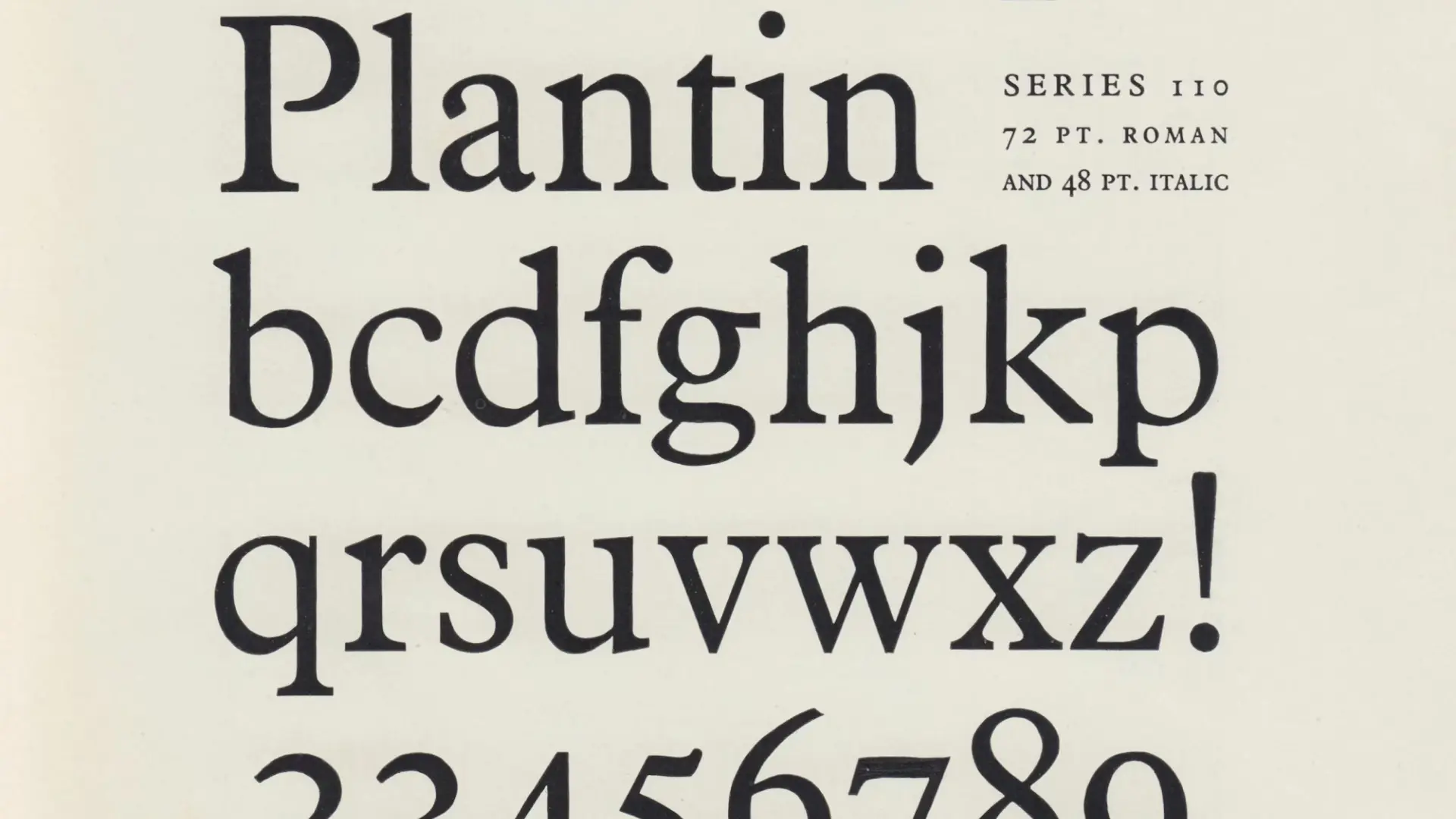
Quietly Intellectual
The Library of Alexandria (Egypt)
Bodley, Vatican, Celsus, Ashurbanipal, Pergamum, Sainte-Genevieve, Trinity, Laurentian, Congress, Marciana, Mellon, Widener, Radcliffe, Beinecke, Sorbonne
Book
The monumental invention of the public library traces its roots back to the ancient empire of Mesopotamia in the year 668 before the common era under the ambitious rule of King Ashurbanipal. History dictates that the royal court of Nineveh, fearing that the state records of the Neo-Assyrian kingdom would dissolve into the forgotten past, ordered the systematic gathering of texts. In a brilliant stroke of resourcefulness, master scribes in the fertile crescent turned to baked earth, systematically writing, cataloging, and shelving 30,000 clay tablets on heavy wooden racks to create a highly durable memory vault. This new institution, named after the grand Kuzunjik palace complex of its birth, transformed into the pristine model of a knowledge house known across the civilized world as an archive or library. Unlike its fragile and scattered predecessors, this stable repository could withstand the passage of time, giving birth to structured classification systems that permanently replaced the chaotic storage of early royal decrees. The historic shift to centralized libraries fundamentally rewrote the structural evolution of human knowledge, education, and text organization. Its sheer physical presence allowed researchers to cross-reference information under a single roof and study both sides of historical debates, optimizing the layout of the collection fields. For centuries, this model preserved the complex thoughts of early civilizations, from the 12 tablets of the Epic of Gilgamesh to the historic 1558 book type weights compiled by European printers like Van Ameet Tavernier and Christopher Plantijn. The library layout offered an exceptionally steady rhythm for public reading, inspiring the robust letters, controlled spacing, and rich academic forms found in early educational masterpieces. Without this crucial 2,600-year-old leap in institutional design, the preservation of early literary history, the evolution of the Western learning system, and the classical book layout traditions that shape modern reading would have simply dissolved into the dust of time.
The monumental proliferation of books across Europe during the fifteenth century permanently reshaped the structural landscape of human thought, education, and text dissemination. Before this era, information remained locked within elite circles, but the invention of movable metal type by Johannes Gutenberg in Mainz around the year 1440 shattered these barriers. Within a few decades, printing workshops erupted in major trading hubs like Venice, Paris, and London, driving down the cost of production and causing book ownership to skyrocket. By the turn of the century, printing presses had produced over 20 million volumes, a staggering surge that outpaced the total output of European scribes from the previous twelve hundred years combined. This sudden, massive influx of physical texts flooded local markets with diverse reading materials, transforming small personal collections into expansive community resources and laying the groundwork for widespread literacy. This unprecedented availability of printed material sparked a powerful intellectual movement known as the European Renaissance, which championed the revival of classical learning and scientific inquiry. Scholars like Desiderius Erasmus and William Caxton used the efficiency of the press to distribute standardized editions of historical, philosophical, and mathematical texts to an eager public. In cities like Basel and Nuremberg, printing houses evolved into vibrant intellectual salons where authors, editors, and correctors gathered to debate radical ideas and challenge established doctrines. The sudden democratization of data allowed natural philosophers to cross-reference scientific observations, fueling early breakthroughs in astronomy, anatomy, and cartography across the continent. Ideas that once took centuries to travel along trade routes now spread across borders in a matter of days, completely destabilizing old authority structures and empowering individuals to think. The massive printing boom also directly accelerated the evolution of modern typography, page layout design, and early industrial book standards. As the demand for longform reading grew, pioneering typographers like Christopher Plantijn and Van Ameet Tavernier crafted highly refined letterforms designed to create a calm, dependable texture on the page. In 1558, these artisans compiled historic type weights, such as the famous Klein Romein castings, to optimize word spacing and enhance visual rhythm for the human eye. These clean alphabets, robust serifs, and balanced margins established the classic structural traditions that still govern contemporary publishing houses and digital fonts today. Without this profound geometric and material revolution in text production, the rapid expansion of Western learning systems, the preservation of global literary achievements, and the uniform reading habits of modern society would have simply dissolved into the dust of time.
JIUZHAIGOU VALLEY, CHINA
1992’s Earth Summit in Rio de Janeiro, Brazil: The Convention on Biological Diversity
Biologist Rachel Carson shook the US in 1962. Her book Silent Spring exposed toxic DDT, sparked an eco-revolution, and saved the Bald Eagle.
These movements created layered forest zones across eastern North America, particularly throughout the 430,000 square miles of the Great Lakes basin and rugged Blue Ridge Province. By roughly 10,000 years ago, as the Laurentide Ice Sheet receded over a period of 1,500 years, the foundations of these modern woodland ecosystems began to take shape. Hardwood species expanded across 3 main ridges of the Appalachian Mountains, while conifer dominated systems developed in colder northern climates like the Superior National Forest. The structure of these habitats was never uniform, instead reflecting a dynamic balance between disturbance and regrowth where fire, storms, and a 4 season variation played roles in maintaining biodiversity. Indigenous communities like the Seneca, Oneida, and Menominee interacted with these 12 distinct eco-regions for 1,200 years in ways that were both intentional and sustainable. By the time British and French timber merchants arrived in the early 1600s, continuous forests covered an estimated 90 percent of the Atlantic landmass. White pine and white oak became primary resources used for shipbuilding, fuel, and international trade across the Atlantic Ocean. As settlements expanded westward toward the Ohio River Valley, large sections of old growth wilderness were cleared, particularly between 1700 and 1900, when agricultural demand and industrial expansion accelerated deforestation. By the late 1800s, states like Ohio and Pennsylvania had lost more than 50 percent of their original tree canopy, prompting early conservationists like John Muir and Gifford Pinchot to demand federal protection. This turning point led to the 1891 Forest Reserve Act, which established the first 15 national forests and laid the groundwork for modern ecological management systems that protect millions of acres today.
Archetype
Copernicus, Gutenberg, Palaemon, La Brea, Smithson, Challenger, Archimedes, Linnaeus, Darwinism, Heidelberg
Ticket Booth
Please don’t touch the exhibits! Keep hands off glass!
Museum archives rely on ISAD(G) standards and ArchivesSpace CMS to manage millions of primary documents. Digitizing 100’s of fragile items (like Darwin’s letters at the Natural History Museum) requires strict metadata schema like EAD (Encoded Archival Description).
BOTANY VIABILITY TESTING
$1.2M Plants Sold Annually in Labs
Kew Gardens houses 2.4B seeds in its Millennium Seed Bank, partnering with 100 global academic institutions. Using USDA standards, this museum-grade repository provides researchers from Oxford to UC Davis vital genetic data to combat 21st-century crop diseases.
Ginkgo, Sequoia, Douglas-fir, Franklinia, Tradescantia, Banksia, Bougainvillea, Dahlia, Fuchsia, Forsythia, Gardenia, Magnolia, Poinsettia, Wisteria, Camellia, Kalmia, Lobelia, Zinnia, Begonia, Cattleya
Leaf
EARTH ROOTS